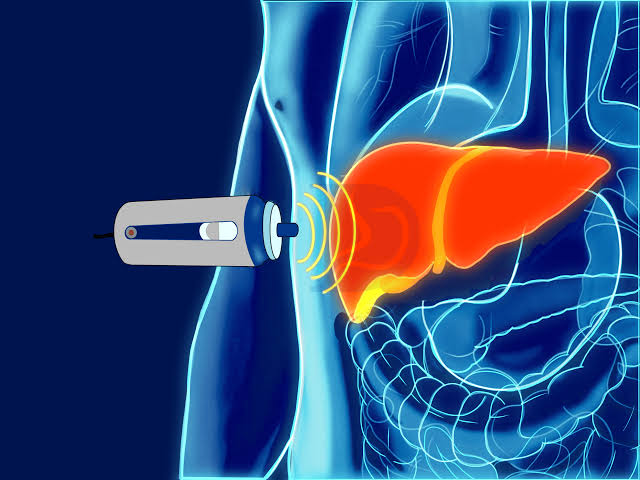
Fatty liver disease has become one of the most common liver diseases worldwide. Its prevalence is steadily increasing due to factors such as a sedentary lifestyle, unhealthy diet, obesity, type 2 diabetes, and metabolic syndrome. Although it can often progress without noticeable symptoms, if not detected at an early stage, it may lead to serious health problems such as liver damage, fibrosis (scarring), cirrhosis, and, in some patients, liver cancer.
Today, one of the most important technologies used to assess liver health is FibroScan® (Transient Elastography). This non-invasive method can quickly and painlessly evaluate liver stiffness and the degree of liver fat accumulation, offering significant advantages for early detection and regular follow-up.
At Centermed, the diagnosis and follow-up of liver diseases are carried out through a reliable approach combining FibroScan technology with expert physician evaluation.
What Is Fatty Liver Disease?
Fatty liver disease is a condition that occurs when excess fat accumulates in liver cells.
While it was previously thought to be mainly associated with alcohol consumption, metabolic risk factors are now recognized as the most common causes. For this reason, the term Metabolic Dysfunction-Associated Steatotic Liver Disease (MASLD) is increasingly used in international guidelines.
Fatty liver disease generally does not cause symptoms in its early stages. As a result, many people discover that they have the condition during routine health check-ups.
What Causes Fatty Liver Disease?
Many factors can contribute to the development of fatty liver disease.
The most common risk factors include:
- Obesity
- Type 2 diabetes
- Insulin resistance
- High cholesterol and triglyceride levels
- Hypertension
- Metabolic syndrome
- Sedentary lifestyle
- Unbalanced diet
- Genetic predisposition
- Excessive alcohol consumption (in alcohol-related liver disease)
Regular liver assessment may be recommended for individuals with one or more of these risk factors.
What Are the Symptoms of Fatty Liver Disease?
The disease often progresses silently.
When symptoms do occur, they may include:
- Fatigue
- Easy tiredness
- Discomfort in the upper right side of the abdomen
- Elevated liver enzymes
- Abdominal bloating
These symptoms are not specific to fatty liver disease. A physician examination and appropriate diagnostic tests are required for an accurate evaluation.
Why Is Fatty Liver Disease Important?
If left untreated, fatty liver disease may progress in some patients, leading to inflammation and fibrosis.
In advanced stages, serious complications may develop, including:
- Liver fibrosis (scarring)
- Cirrhosis
- Portal hypertension
- Liver failure
- Hepatocellular carcinoma (liver cancer)
For this reason, early detection is of great importance.
What Is FibroScan®?
FibroScan® is a non-invasive diagnostic method developed to assess liver stiffness (fibrosis) and the amount of fat in the liver.
Using technology similar to ultrasound, FibroScan measures the speed at which vibration waves travel through liver tissue, providing information about liver stiffness.
It can also evaluate the degree of liver steatosis using the CAP (Controlled Attenuation Parameter) measurement.
How Does FibroScan Work?
During the procedure, the patient lies on their back.
A specialized probe is placed over the liver area, and measurements are taken within a few minutes.
The procedure:
- Is painless.
- Does not involve needles.
- Does not use radiation.
- Usually takes approximately 10–15 minutes.
- Does not interfere with daily activities.
The results should be interpreted together with the patient's clinical evaluation and other diagnostic tests.
Advantages of FibroScan®
FibroScan is not a replacement for liver biopsy; however, in appropriate patients, it is a valuable assessment method that may help reduce the need for biopsy.
Its main advantages include:
Non-Invasive
The liver can be evaluated without surgery or biopsy.
Painless and Comfortable
Patients generally do not experience pain during the procedure.
Provides Rapid Results
Measurements can be completed within a short period of time.
Measures Liver Stiffness
It contributes to the assessment of the degree of liver fibrosis.
Evaluates Liver Fat
CAP technology provides information about the amount of fat accumulated in the liver.
Suitable for Follow-Up
With a physician's recommendation, FibroScan can be repeated to monitor the progress of treatment or the effects of lifestyle changes.
Who May Be Recommended to Have a FibroScan?
Based on a physician's evaluation, FibroScan may be considered for:
- Individuals with fatty liver disease
- People with elevated liver enzymes
- Patients with type 2 diabetes
- Individuals with obesity
- People with metabolic syndrome
- Patients with chronic viral hepatitis
- Individuals with alcohol-related liver disease
- Patients requiring monitoring for liver fibrosis
The most appropriate evaluation method should be determined based on each patient's clinical condition.
What Is the Difference Between FibroScan and Liver Biopsy?
Liver biopsy remains the gold-standard diagnostic method in certain clinical situations.
FibroScan, on the other hand:
- Is non-invasive.
- Is more comfortable.
- Can be repeated.
- Can be performed in a short time.
- Provides rapid information about liver stiffness and fat accumulation.
However, in certain clinical circumstances, a biopsy may still be necessary. The decision should be made by the treating physician.
Can Fatty Liver Disease Be Prevented?
Lifestyle changes can have a positive impact on liver health in many individuals.
Recommendations may include:
- Reaching and maintaining a healthy weight
- Engaging in regular physical activity
- Following a balanced diet
- Reducing sugary beverages
- Limiting processed foods
- Maintaining good control of diabetes and cholesterol levels
- Having regular health check-ups
The treatment plan should be individualized and determined by a physician.
Liver Assessment with FibroScan at Centermed
Centermed combines current diagnostic technologies with expert medical evaluation in the assessment of liver health.
With FibroScan examination:
- Liver steatosis can be evaluated.
- Liver stiffness can be measured.
- Disease monitoring can be supported.
- Objective data that may contribute to treatment planning can be obtained.
The results are comprehensively evaluated together with the patient's medical history, physical examination, laboratory findings, and other imaging methods.
Frequently Asked Questions
Is FibroScan a painful procedure?
No. Patients may feel only a mild vibration during the procedure, and it generally does not cause pain.
Is a biopsy necessary instead of FibroScan?
FibroScan provides valuable information for many patients; however, in certain cases, a biopsy may be necessary for definitive diagnosis or further evaluation.
Should FibroScan be performed on an empty stomach?
In many centers, fasting for several hours before the procedure may be recommended. Patients should follow the preparation instructions provided by the healthcare team before their appointment.
Are FibroScan results available immediately?
Measurements are obtained during the procedure. The clinical interpretation of the results is performed by a specialist physician.
Conclusion
Fatty liver disease is a common health condition that may not cause symptoms in its early stages but can lead to serious liver disease as it progresses. Therefore, regular evaluation is particularly important for individuals with relevant risk factors.
FibroScan technology plays an important role in the early detection and follow-up of liver disease by providing a non-invasive assessment of liver fat accumulation and fibrosis.
With its FibroScan technology and experienced medical team, Centermed aims to provide reliable, efficient, and patient-centered liver health assessment services.