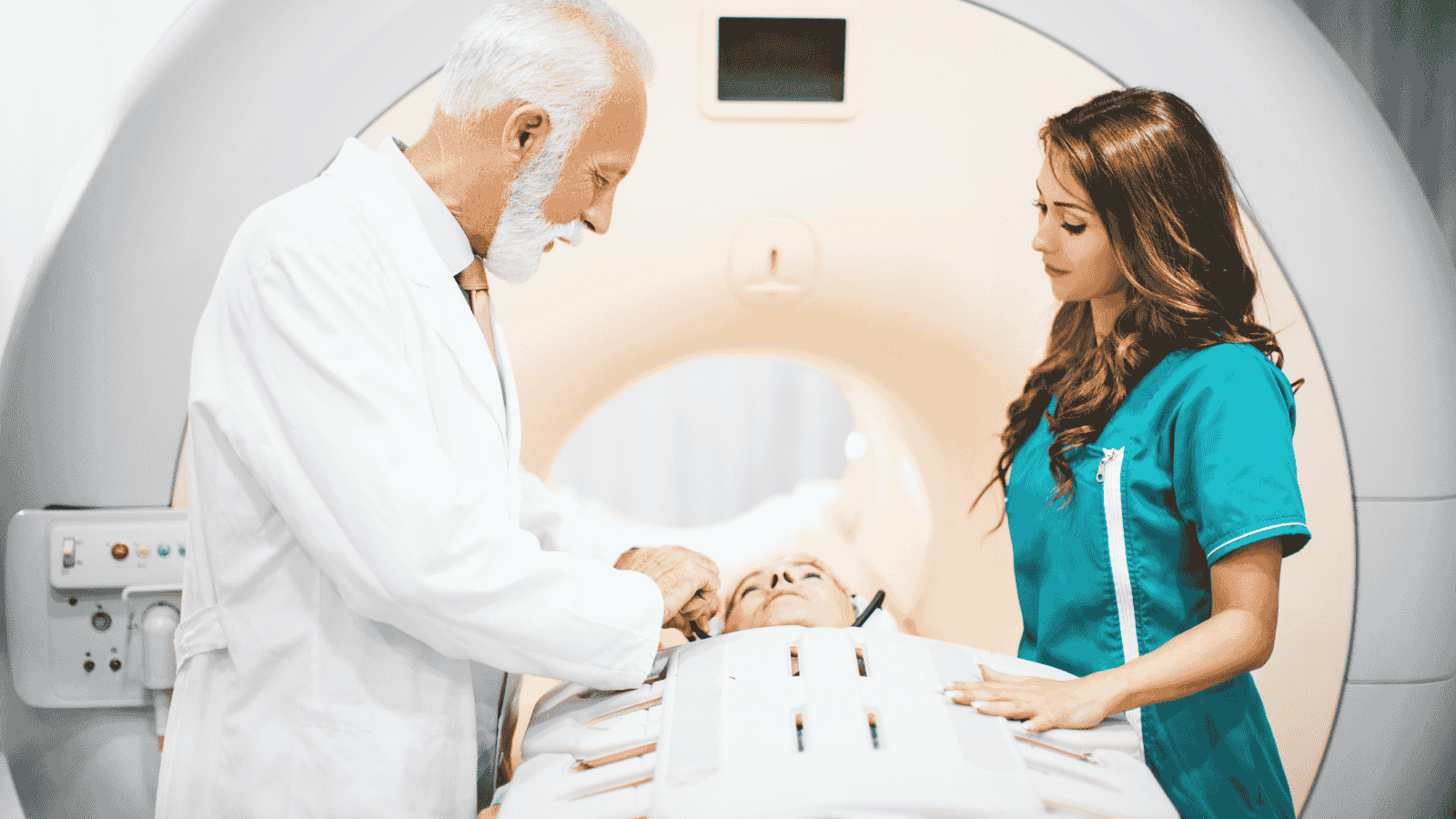
Abdomen and Lower Abdomen (Pelvis) MRI
What is Total Abdomen (Belly) and Pelvis MRI?
MRI (Magnetic Resonance Imaging) is an advanced, non-invasive, painless, and radiation-free medical imaging method that uses strong magnetic fields, radio waves, and advanced computer software to obtain high-resolution images of the body.
Thanks to 3 Tesla MRI technology, organs in the abdomen and pelvis can be imaged in much greater detail and clarity. The method does not involve ionizing radiation, as used in X-rays or computed tomography (CT), and is a patient-friendly option.
In the near future, AI-assisted MRI technologies will offer significant innovations with faster scans, personalized imaging protocols, and clinical interpretation support.
When is a Full Abdomen and Pelvis MRI Performed?
Abdominal and pelvic MRI is performed for:
- Abdominal pain,
- Jaundice,
- Unexplained fever,
- Unintentional weight loss,
- High blood pressure,
- Blood in urine,
- Abdominal swelling,
- Painful menstruation
such complaints allow for detailed examination of the organs in the abdomen and pelvis.
During imaging, the internal abdominal organs are evaluated in detail:
Liver, bile ducts, gallbladder, stomach, intestines, pancreas, kidneys, adrenal glands, spleen, bladder, urinary tract, uterus, ovaries, prostate, testicles, blood vessels, and lymph nodes.
Advantages of MRI over Ultrasound and CT
In CT scans, the appearance of bone structures in the image can limit some details due to the artifacts they create.
Although ultrasonography (USG) is the first choice in many cases, it may not be able to evaluate some suspicious areas with sufficient clarity.
Whole abdomen and pelvis MRI provides unrivaled superiority, especially in imaging soft tissues.
Therefore, it is one of the most reliable methods in cases requiring a definitive diagnosis.
Conditions That Can Be Evaluated with Abdominal and Pelvic MRI
1. Tumors and Cancer Diseases
Tumors in the abdomen and lower abdomen
Staging of cancers and metastasis assessment
Colon, rectum, and anal cancers
Bladder tumors
Female reproductive organ (uterus, cervix, ovaries) cancers
Prostate and testicular tumors
2. Liver and Bile Ducts
Liver cirrhosis
Liver tumors, cysts, hemangiomas
Gallbladder and bile duct diseases
Non-invasive imaging of bile and pancreatic ducts with MRCP
3. Kidney and Urological Diseases
Kidney tumors, cysts, and stones
Hydronephrosis
Urinary tract strictures and infections
Follow-up after kidney transplantation
4. Vascular Diseases
Abdominal aortic aneurysm
Portal vein and renal artery occlusions
Vena cava stenosis and embolisms
Vasculitis and vascular inflammations
5. Gastrointestinal System
Crohn's disease, ulcerative colitis
Appendicitis and diverticulitis
Inflammatory bowel diseases
Intestinal fistulas
6. Gynecological and Urological Diseases
Uterine, cervical, and ovarian diseases
Endometriosis
Prostate diseases
Testicular torsion, undescended testicles
7. Infection and Inflammation
Intra-abdominal abscess
Infection foci
Ascites (fluid accumulation between the peritoneum and intra-abdominal organs)
8. Use During Pregnancy
In necessary cases, MRI is preferred after the first trimester to protect the health of the mother and baby.
Precautions for Whole Abdomen and Pelvis MRI
Breathing movements and bowel activity in the abdominal area can affect image quality.
Therefore, during the scan:
Compliance with breath-holding commands
Remaining completely still is important.
Pain, stress, or movement can reduce scan quality, resulting in diagnostically inadequate images.
Why is a Full Abdominal and Pelvic MRI Requested?
- Diagnosis and staging of tumors
- Investigation of metastasis
- Enlargement of lymph nodes
- Vascular narrowing, blockage, aneurysm
- Liver and kidney diseases
- Bile duct and pancreas problems
- Urological tumors and infections
- Inflammatory bowel diseases
- Appendicitis, diverticulitis
- Female and male reproductive system diseases
- Fetal and maternal problems during pregnancy
- MRI-guided biopsy when necessary